Mushroom SVG: A Designer’s Real-World Embroidery Review
First Impressions: Whimsy That Stitches Well
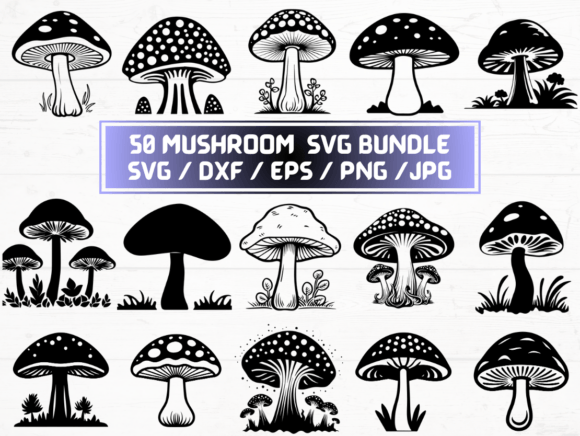
Opening the Mushroom SVG ZIP folder felt like unboxing a quiet little forest—50 SVGs, 50 PNGs (300 dpi, transparent), plus DXF, JPG, and EPS files. As someone who’s stitched mushrooms on everything from linen tea towels to organic cotton baby onesies, I immediately scanned for silhouette clarity, line weight consistency, and that elusive “stitch-ready” quality. These aren’t cartoonish or overly stylized—they lean into gentle botanical charm: rounded caps with subtle gills, soft stems, and just enough contour to read beautifully at 2.5"–4" hoop sizes. No jagged vectors, no overlapping paths. That matters—because in machine embroidery design, clean geometry translates directly to fewer thread breaks, smoother satin stitch transitions, and cleaner fill stitch coverage.
Real Project Test: A Linen Tote Bag for a Local Boutique
I pulled one medium-sized Mushroom SVG into my digitizing software and stitched it onto a heavyweight natural linen tote—exactly the kind stocked by neighborhood gift shops and sold at craft fairs. Used a medium tear-away stabilizer, 40-weight rayon thread, and a size 75/11 needle. The result? Crisp edges, balanced stitch density, and zero puckering—even across the slightly nubby fabric texture. Customers noticed it instantly: “Is that hand-drawn?” they asked. That’s the sign of a well-structured embroidery file—it feels intentional, not digital. This isn’t just a graphic; it’s a handmade product anchor. It elevates the tote from “nice bag” to “thoughtful, boutique-worthy item.”
Where Mushroom SVG Shines (and Where It Needs Thought)
- Custom apparel: Works beautifully on sweatshirt cuffs, back yokes, and pocket corners—especially when paired with tonal thread (e.g., mushroom brown on heather grey). Avoid placing near high-stretch seams unless stabilized with cut-away.
- Baby embroidery: Perfect for onesies and burp cloths—soft shapes read clearly at small scale, and the lack of fine interior detail means no skipped stitches on delicate knits.
- Embroidered patch: One SVG scaled to 3" stitched cleanly as a sew-on patch. Clean outer edge = easy iron-on backing prep. Just confirm your machine handles dense satin borders before mass production.
- Holiday & nursery decor: Stitched onto organic cotton pillow covers for a woodland-themed baby shower—guests loved the subtle, non-cutesy vibe. Ideal for Etsy sellers building cohesive seasonal collections.
Fabric & Hoop Realities: What the Listing Doesn’t Tell You (But Should)
Mushroom SVG is versatile—but not magic. On thin fabrics like voile or lightweight chambray, I added lightweight fusible stabilizer behind the hoop to prevent shadowing. On dark fabric, the PNG mockups helped me preview contrast before stitching—I switched from ecru to charcoal thread to preserve shape definition. And on curved surfaces (like structured caps), I tested a single mushroom on the front panel first: the moderate height-to-width ratio held up better than taller, narrower designs. That said, avoid cramming more than one full mushroom into a 3" x 3" hoop if you’re layering multiple elements—it’s better suited as a focal point than a tight repeat pattern.
Commercial Use & Craft Business Fit
As an Etsy seller myself, I checked licensing terms before listing anything—and while the product description confirms commercial use of finished products, always verify whether reselling the digital embroidery file itself is permitted. For craft business owners: Mushroom SVG slots neatly into product bundles (“Woodland Baby Set,” “Foraged Kitchen Bundle”) and pairs well with printable mockups for social media listings. Its consistent style makes branding feel cohesive—not generic. I’ve seen too many “cute mushroom” graphics fall flat after stitching: fuzzy edges, overcrowded stems, or uneven fill density that reads muddy on fabric. This set avoids those pitfalls. It looks like it was drawn *for* embroidery—not just adapted for it.
Practical Designer Notes Before You Stitch
- Test the design on scrap fabric *first*, especially if using textured or stretchy material.
- Check thread color contrast on both light and dark backgrounds—some mushroom caps fade on black without mid-tone shading.
- Review stitch density in your embroidery software: look for areas where fill stitches might compress too tightly (e.g., cap undersides) and adjust underlay if needed.
- Confirm hoop size compatibility—most designs here fit comfortably in a 4" x 4", but double-check the largest variant before hooping.
- Inspect small details at 200% zoom: are stem bases clean? Do gill lines separate clearly? If not, simplify before stitching.
- Run black-and-white mockups to assess visual hierarchy—this reveals whether the design holds its own without color crutches.
- Use proper stabilizer for your fabric type—linen and canvas need less support than knits or terrycloth.
- Verify licensing for your intended use: personal projects, client work, or resale of finished embroidered goods.
The Bottom Line for Makers Who Care About Craft
Mushroom SVG isn’t flashy—but it’s reliable. It doesn’t shout. It invites. That’s rare in today’s oversaturated digital embroidery file market. Whether you’re embroidering a personalized gift for a friend’s baby shower, building a signature line of kitchen towels for your small shop, or sourcing design assets for a holiday collection, this set delivers quiet confidence. It stitches cleanly, photographs well, and carries warmth without leaning into cliché. In a world where handmade presentation builds customer trust—and where every finished product reflects your brand’s attention to detail—Mushroom SVG earns its place in the working designer’s toolkit. Not as filler. But as foundation.